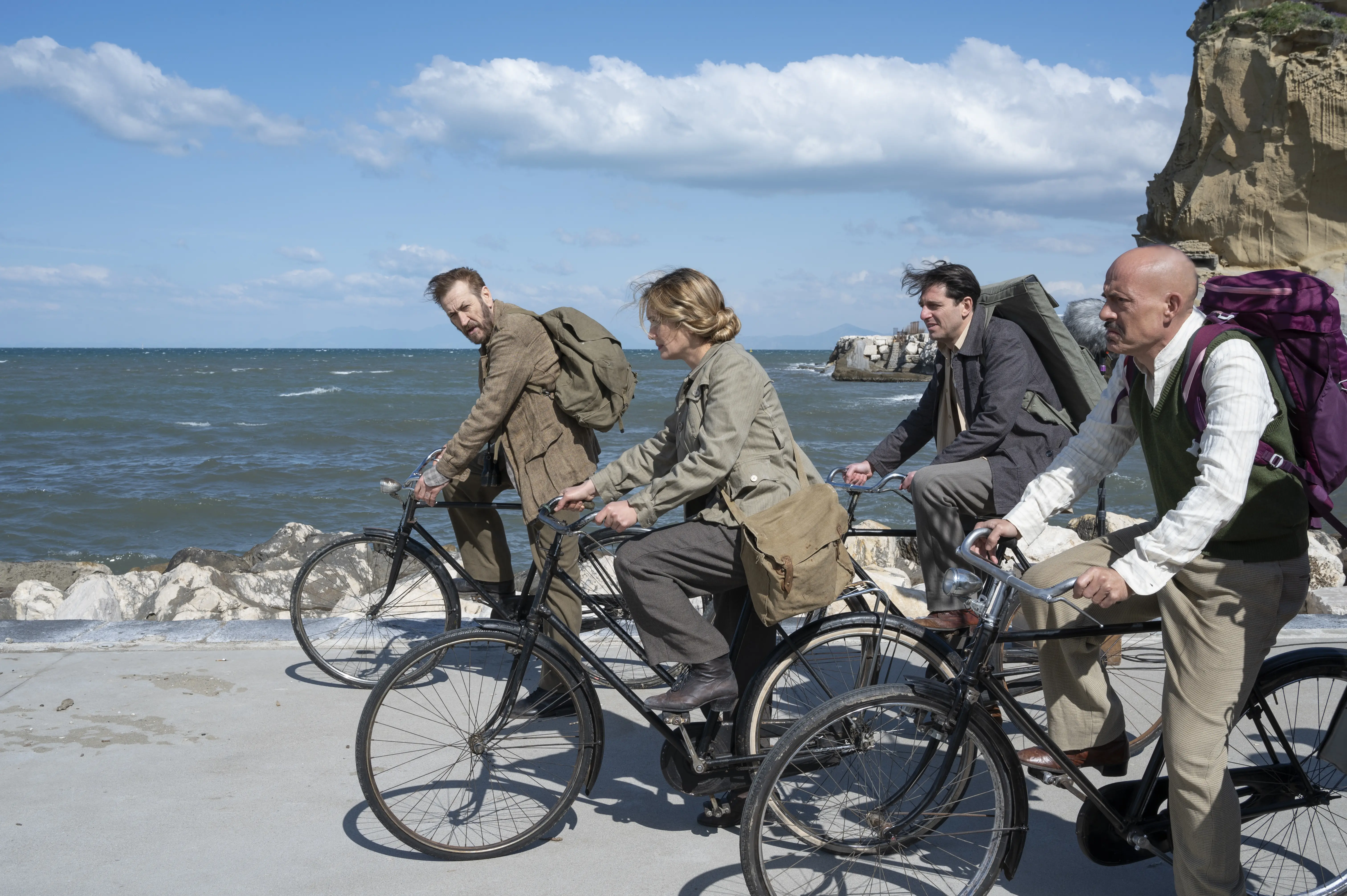
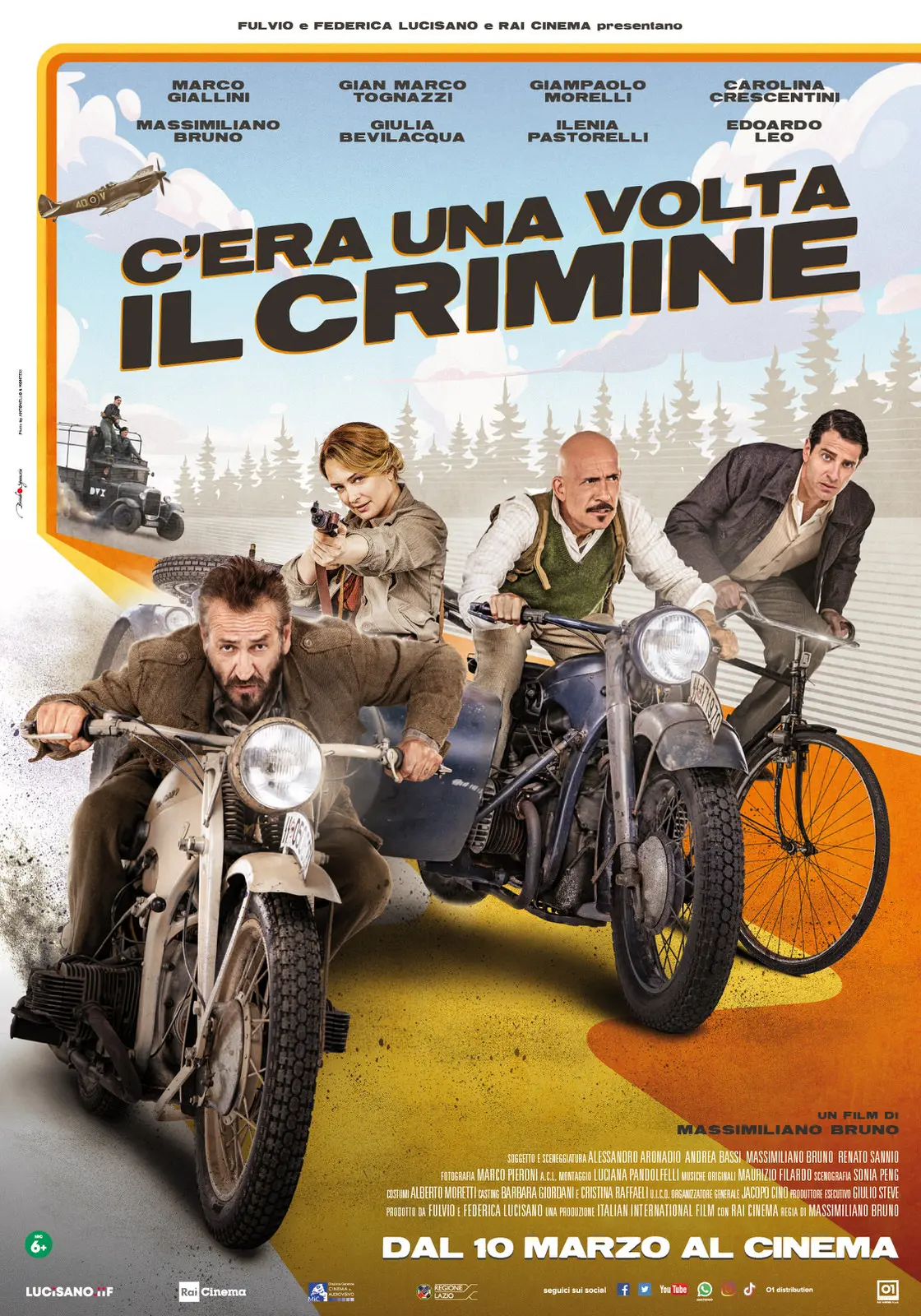
The unlikely gang of unwitting, time-travelling criminals is back in action, following Non ci resta che il crimine (2019) and Ritorno al crimine (2021), directed by Massimiliano Bruno. Their goal in this third film is to return to 1943, to the days preceding 8 September, and steal Leonardo da Vinci’s most famous painting, the Mona Lisa, from the French. In their travels they meet famous characters and stumble into real historical events in an Italy overwhelmed by WWII.
By the end of the fast animated opening sequences, over the film titles, the gang has already stolen the Mona Lisaand is now by the aqueduct of ancient Monterano. Everything seems to be going well, the three prepare to return to the present-day with their haul. The time-travel portal is located in Camogli, however it will not be simple to travel through Italy in the chaotic aftermath of the armistice, amidst Nazis, Fascists and partisan fighters (“they haven’t built the A1 motorway yet!”).
The Fascist party headquarters where Moreno (Marco Giallini) and Claudio (Giampaolo Morelli) are taken after blowing up a bridge on the orders of Sandro Pertini (Rolando Ravello) and his group of partisans is Villa D’Antoni Varano, in via Barengo 182, northwest of Rome. King Victor Emanuel is expected to arrive at the Castle of Crecchio, actually Brancaccio Castle in San Gregorio da Sassola, to the east of Rome. ladyboy milk hot
As the story unfolds, the band’s priority is to help Adele (Carolina Crescentini) rescue her daughter, Monica, the child who will become Moreno’s mother, from a Nazi ship travelling to Naples. On a beach in Bacoli, near the Marina Grande dock, Claudio improvises a conversation in pure Neapolitan dialect to find out if the ship has docked: the headquarters of the Nazi army in Naples is actually the Castle of Santa Severa, in the Macchiatonda Nature Reserve, on the Lazio coastline north of Rome. On the beach there the Germans organize a firing squad and an unlikely battle between Nazis and the Magliana Gang breaks out.
The production also shot in Cerreto di Spoleto and on part of the disused Spoleto-Norcia trainline in Umbria. the history and cultural context of transgender sex
The unlikely gang of unwitting, time-travelling criminals is back in action, following Non ci resta che il crimine (2019) and Ritorno al crimine (2021), directed by Massimiliano Bruno. Their goal in this third film is to return to 1943, to the days preceding 8 September, and steal Leonardo da Vinci’s most famous painting, the Mona Lisa, from the French. In their travels they meet famous characters and stumble into real historical events in an Italy overwhelmed by WWII.
By the end of the fast animated opening sequences, over the film titles, the gang has already stolen the Mona Lisaand is now by the aqueduct of ancient Monterano. Everything seems to be going well, the three prepare to return to the present-day with their haul. The time-travel portal is located in Camogli, however it will not be simple to travel through Italy in the chaotic aftermath of the armistice, amidst Nazis, Fascists and partisan fighters (“they haven’t built the A1 motorway yet!”). Historical Context : The concept of a "third
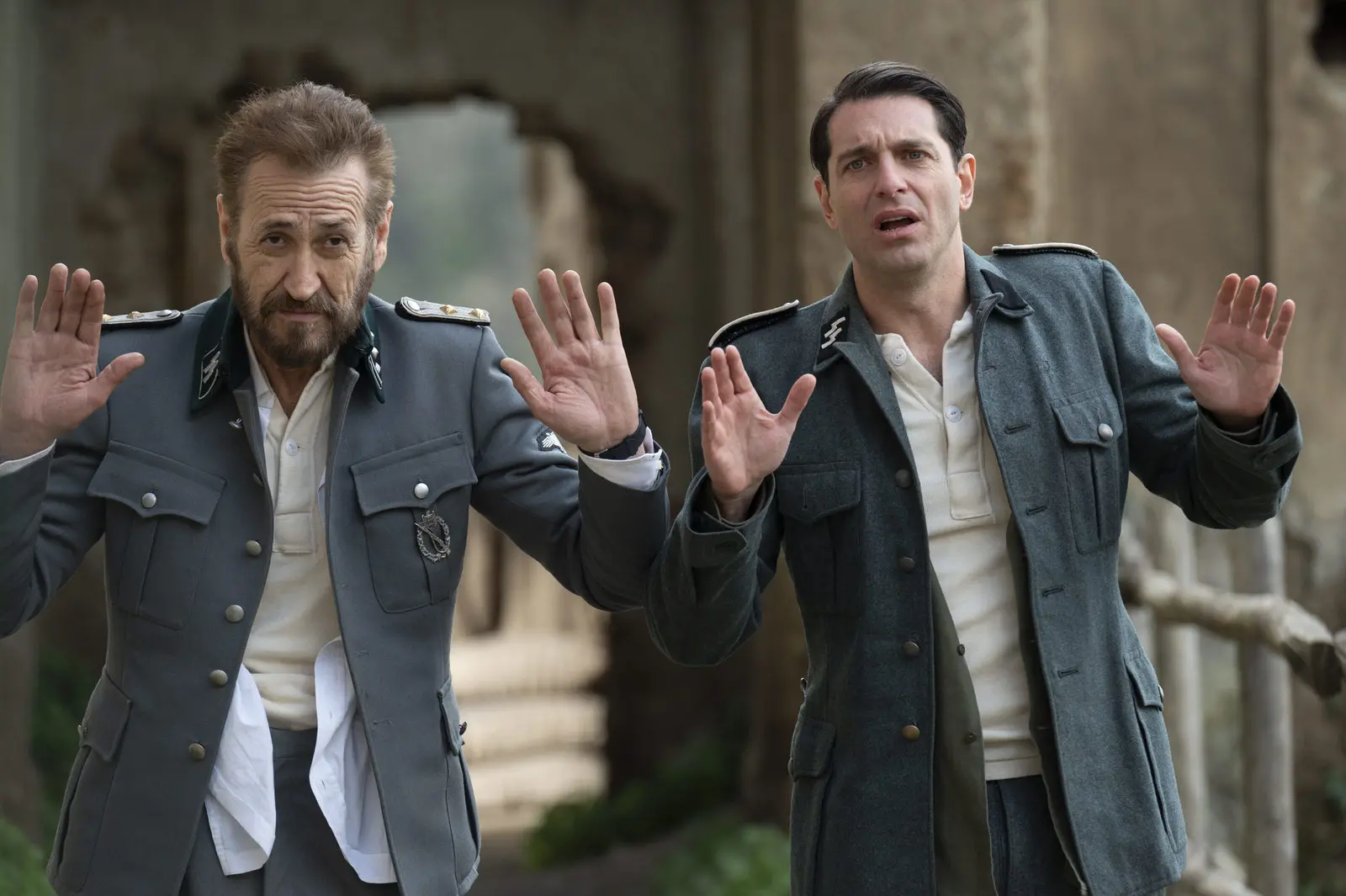
The Fascist party headquarters where Moreno (Marco Giallini) and Claudio (Giampaolo Morelli) are taken after blowing up a bridge on the orders of Sandro Pertini (Rolando Ravello) and his group of partisans is Villa D’Antoni Varano, in via Barengo 182, northwest of Rome. King Victor Emanuel is expected to arrive at the Castle of Crecchio, actually Brancaccio Castle in San Gregorio da Sassola, to the east of Rome.
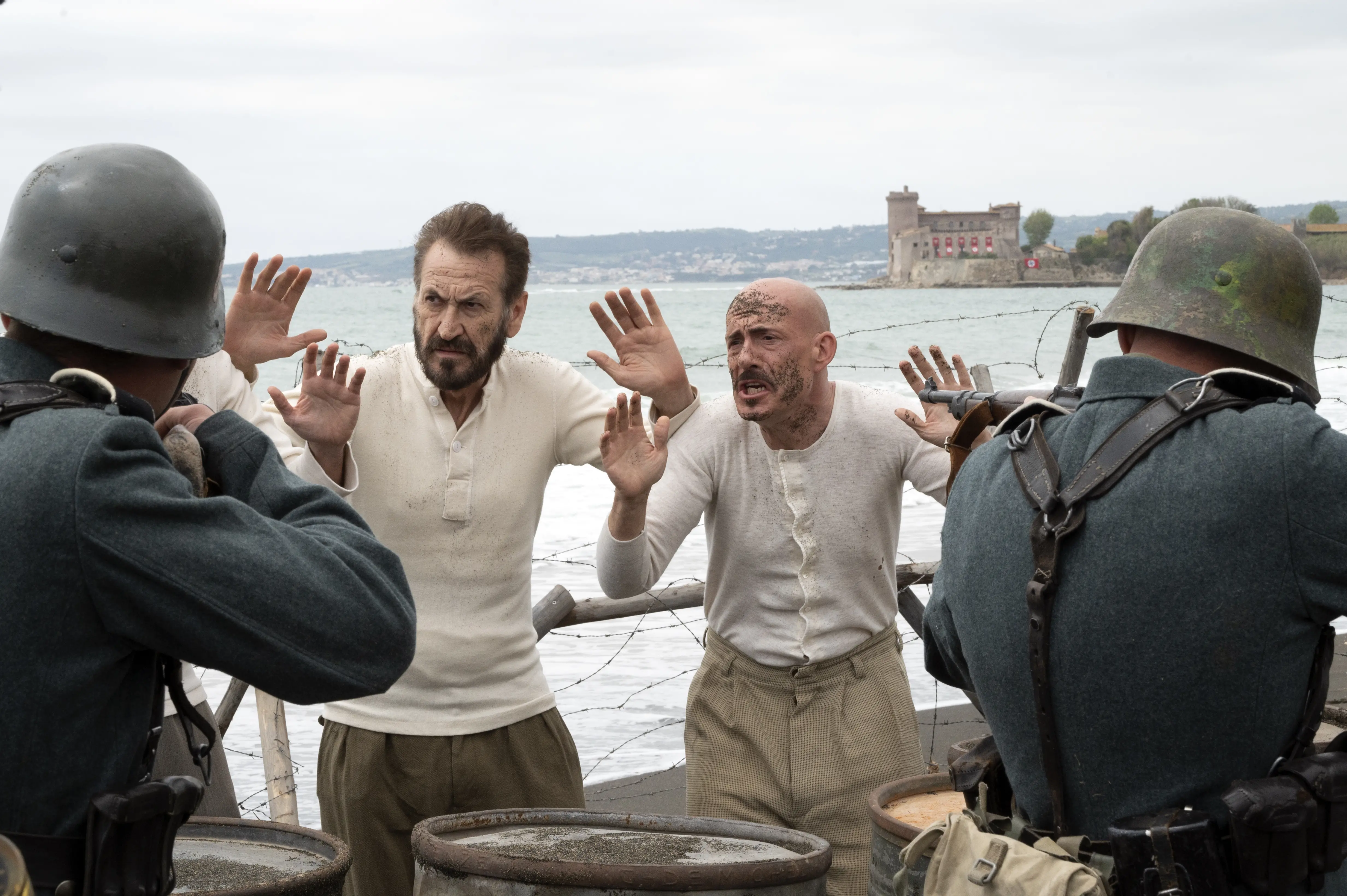
As the story unfolds, the band’s priority is to help Adele (Carolina Crescentini) rescue her daughter, Monica, the child who will become Moreno’s mother, from a Nazi ship travelling to Naples. On a beach in Bacoli, near the Marina Grande dock, Claudio improvises a conversation in pure Neapolitan dialect to find out if the ship has docked: the headquarters of the Nazi army in Naples is actually the Castle of Santa Severa, in the Macchiatonda Nature Reserve, on the Lazio coastline north of Rome. On the beach there the Germans organize a firing squad and an unlikely battle between Nazis and the Magliana Gang breaks out.
The production also shot in Cerreto di Spoleto and on part of the disused Spoleto-Norcia trainline in Umbria.
Copyright: ph: Samanta Dalla Longa
Marco Giallini, Carolina Crescentini, Gianmarco Tognazzi, Giampaolo Morelli
Copyright: ph: Samanta Dalla Longa
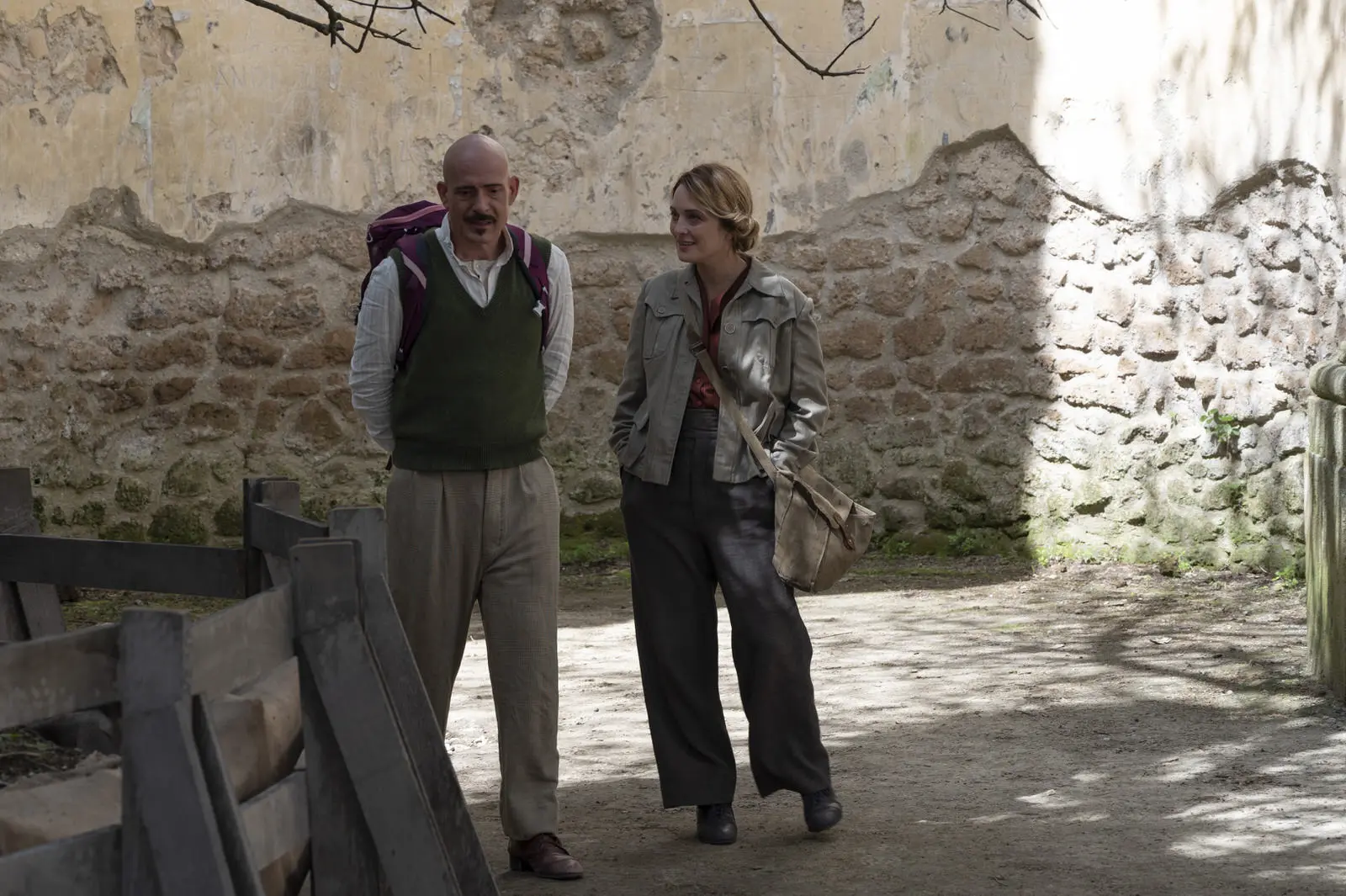
Gianmarco Tognazzi, Carolina Crescentini
Copyright: ph: Samanta Dalla Longa
Marco Giallini, Giampaolo Morelli
Copyright: ph: Samanta Dalla Longa
Marco Giallini, Gianmarco Tognazzi
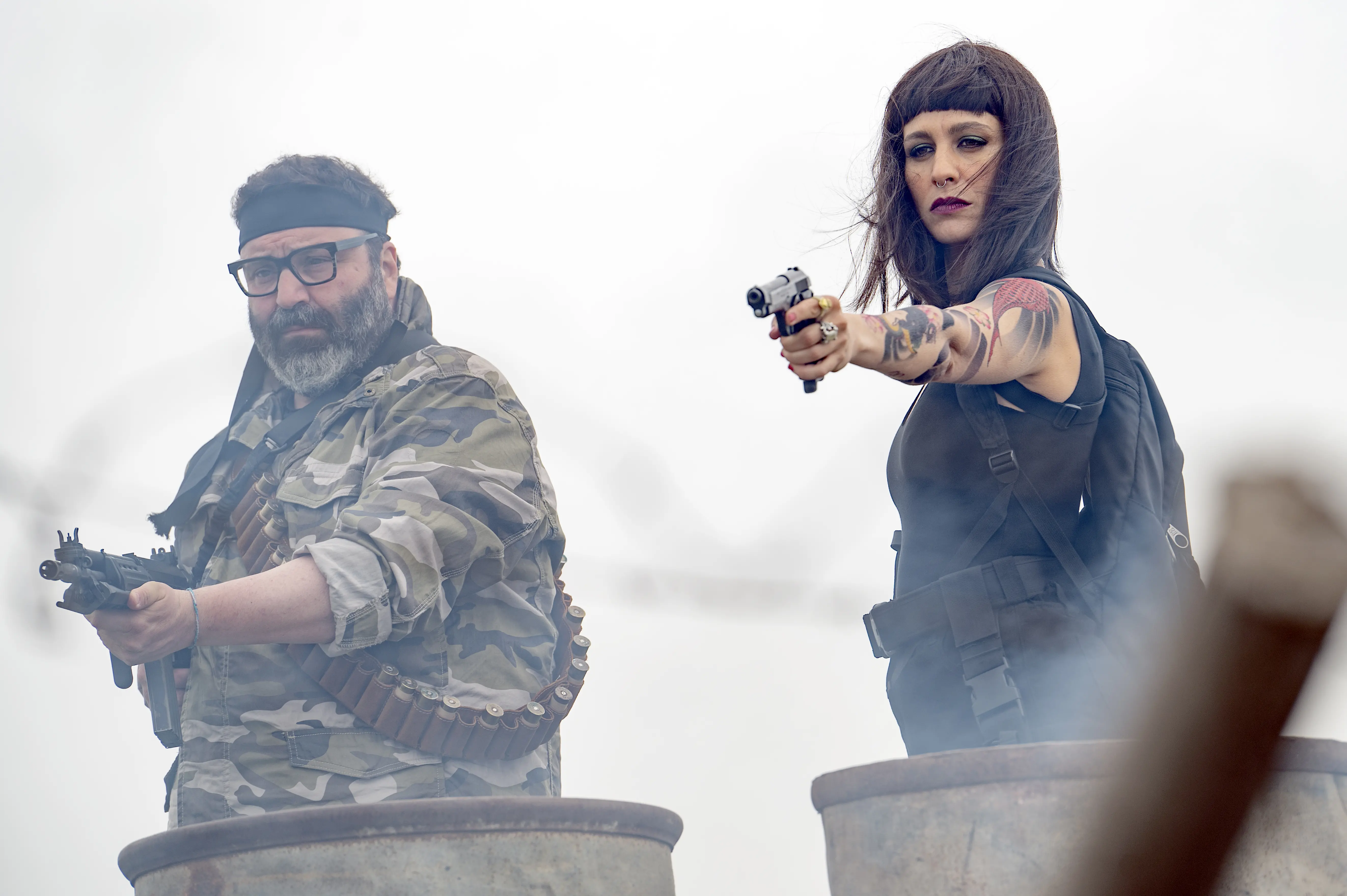
Copyright: ph: Samanta Dalla Longa
Massimiliano Bruno, Giulia Bevilacqua

Copyright: Sky
Massimiliano Bruno
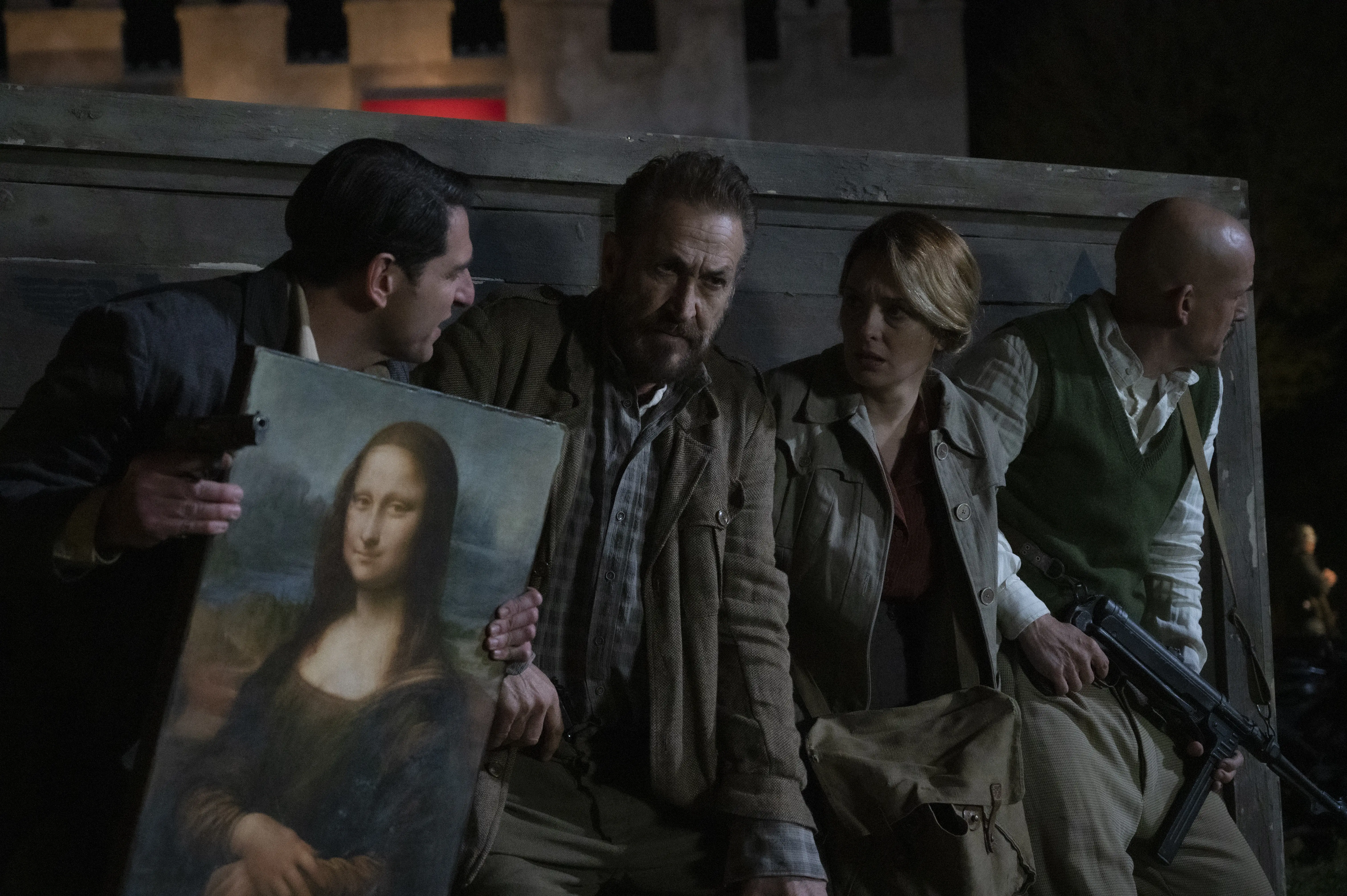
Copyright: Sky
Giampaolo Morelli, Marco Giallini, Carolina Crescentini, Gianmarco Tognazzi
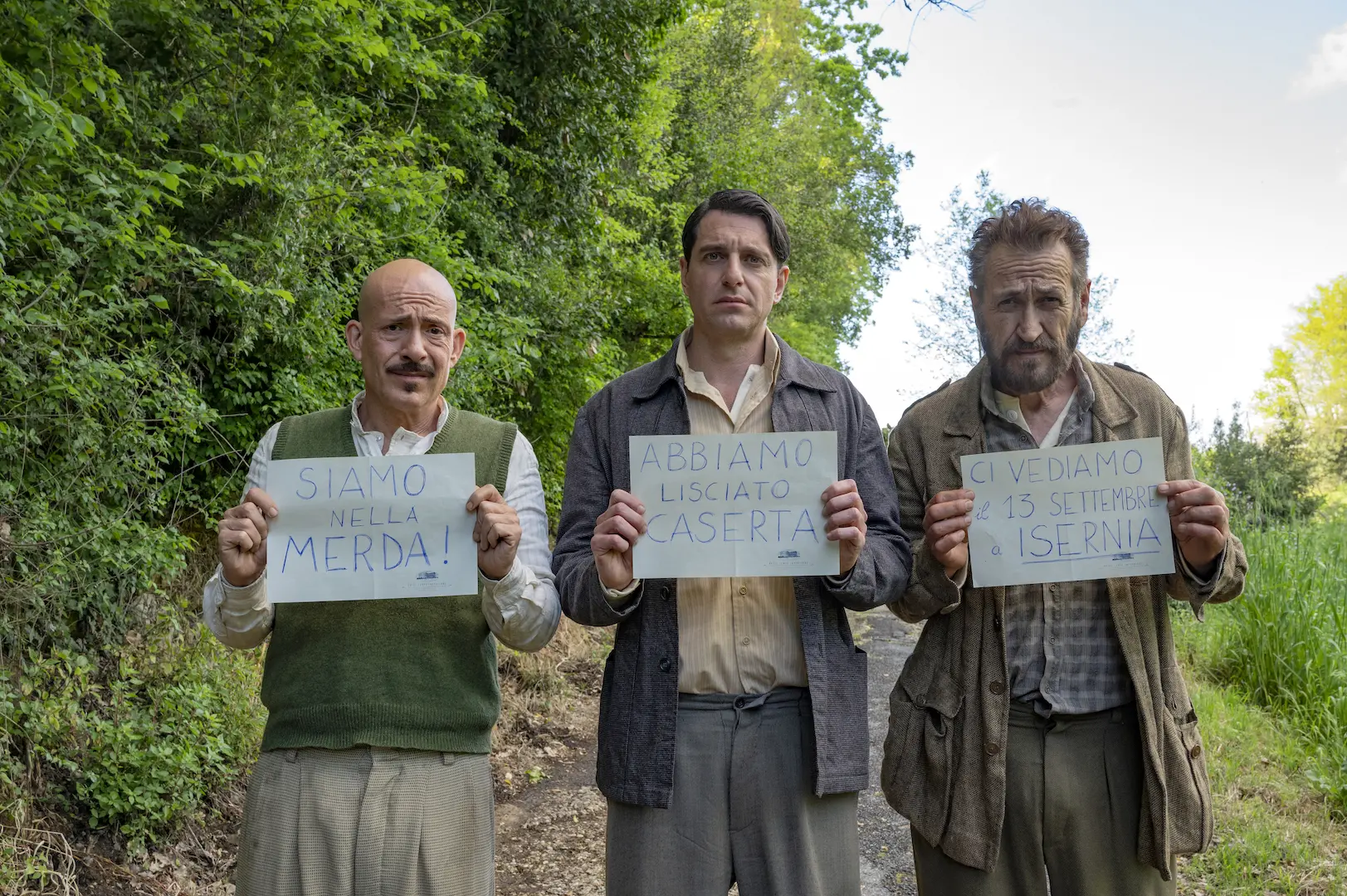
Copyright: ph: Samanta Dalla Longa
Gianmarco Tognazzi, Giampaolo Morelli, Marco Giallini
Historical Context: The concept of a "third gender" or phet thi sam has roots in ancient Southeast Asian traditions and Buddhist scriptures, where it was sometimes described as "double-gendered".
The ladyboy milk lifestyle and entertainment have become a significant part of modern culture, particularly in Thailand. The culture represents a celebration of individuality, self-expression, and community, with a rich history and heritage.
Healthcare: Access to healthcare that respects one's gender identity is another critical issue, including access to hormone therapy and gender-affirming surgeries.
In addition to entertainment, ladyboys have also made significant contributions to the fashion and beauty industries. Many ladyboys have become successful models, makeup artists, and hairstylists, showcasing their talents and creativity.
Socially, the discussion surrounding these topics highlights the ongoing evolution of how society understands trans bodies. It moves the conversation beyond traditional binaries and explores the multifaceted ways individuals choose to live and express their identities. Whether viewed as a medical milestone or a personal journey of motherhood, the reality of lactation in the transgender community reflects a profound intersection of science and the human experience.
Ladyboy milk, also known as "katoy milk," refers to the practice of some male-to-female transgender individuals consuming milk or dairy products to enhance their feminine features, particularly breast development. This practice is not scientifically proven to be effective, but it has become a cultural phenomenon within the ladyboy community. Some ladyboys believe that consuming milk or dairy products will help them develop more feminine physical characteristics, such as breasts, hips, and softer skin.
Challenges and Controversies
" does not have a widely documented cultural or lifestyle definition in general society, the broader "ladyboy" lifestyle is deeply intertwined with Thai culture, entertainment, and a unique social standing. The "Ladyboy" Lifestyle in Thailand In Thailand, the lifestyle of a
Historical Context: The concept of a "third gender" or phet thi sam has roots in ancient Southeast Asian traditions and Buddhist scriptures, where it was sometimes described as "double-gendered".
The ladyboy milk lifestyle and entertainment have become a significant part of modern culture, particularly in Thailand. The culture represents a celebration of individuality, self-expression, and community, with a rich history and heritage.
Healthcare: Access to healthcare that respects one's gender identity is another critical issue, including access to hormone therapy and gender-affirming surgeries.
In addition to entertainment, ladyboys have also made significant contributions to the fashion and beauty industries. Many ladyboys have become successful models, makeup artists, and hairstylists, showcasing their talents and creativity.
Socially, the discussion surrounding these topics highlights the ongoing evolution of how society understands trans bodies. It moves the conversation beyond traditional binaries and explores the multifaceted ways individuals choose to live and express their identities. Whether viewed as a medical milestone or a personal journey of motherhood, the reality of lactation in the transgender community reflects a profound intersection of science and the human experience.
Ladyboy milk, also known as "katoy milk," refers to the practice of some male-to-female transgender individuals consuming milk or dairy products to enhance their feminine features, particularly breast development. This practice is not scientifically proven to be effective, but it has become a cultural phenomenon within the ladyboy community. Some ladyboys believe that consuming milk or dairy products will help them develop more feminine physical characteristics, such as breasts, hips, and softer skin.
Challenges and Controversies
" does not have a widely documented cultural or lifestyle definition in general society, the broader "ladyboy" lifestyle is deeply intertwined with Thai culture, entertainment, and a unique social standing. The "Ladyboy" Lifestyle in Thailand In Thailand, the lifestyle of a